STEM Coding Lab: Expanding Access to Computer Science for K–8 Students
STEM Coding Lab began with a simple but urgent goal: to ensure that children in under-resourced communities are not left behind as technology reshapes the future of work. What started in 2017 as a small initiative serving just 15 students has since grown into a multi-site program reaching thousands of K–8 students across Allegheny County, Pennsylvania—many of whom attend Title I schools with limited access to computer science education.
Through a combination of in-school instruction, afterschool programming, and summer camps, STEM Coding Lab introduces students to foundational computer science and digital skills at an age when early exposure can make a lasting difference. The organization focuses on communities where access gaps are widest, helping students build confidence, curiosity, and problem-solving skills through hands-on, project-based learning.
As a Kars4Kids small grant recipient, STEM Coding Lab is expanding its reach while staying rooted in its mission: ensuring that a child’s zip code does not determine their access to opportunity in the digital economy. In the interview below, we spoke with STEM Coding Lab CEO Melissa Fuller to learn more about the organization’s work, impact, and plans for growth.
K4K: Can you tell us about the students you serve? What do they have in common in terms of background or access to opportunity?
Melissa Fuller: What started as a small initiative serving just 15 students in 2017 has grown into a transformative program. Today, we serve over 4,300 students across 30 locations at 20 schools and institutions in Allegheny County, PA. Our nine teachers provide 180 classes each week. Our computer science classes are delivered in-school, afterschool, and during the summer, focusing on Title I schools, where more than 70% of students qualify for free or reduced-price lunch. However, fewer than 30% of K–8 students in high Title I school districts have access to foundational CS/STEM education, resulting in a significant digital skills gap.
K4K: You work with K–8 students. What is the importance of digital skills for this particular age group?
Melissa Fuller: According to a National Skills Coalition (NSC) study, 92% of jobs in the U.S. labor market require digital skills. Experts predict that over 80% of jobs will utilize Artificial Intelligence (AI) by 2035. As AI and automation reshape the global workforce, the jobs of tomorrow will require critical thinking, problem-solving, creative design, and computational thinking skills. SCL helps students adapt to this change by providing the core skills to understand and leverage technology, preparing them to become part of tomorrow’s workforce.
K4K: What is the ultimate goal of STEM Coding Lab?
Melissa Fuller: The ultimate goal of STEM Coding Lab is a world where all children are given the same opportunity to learn and thrive with the skills needed to be successful in the digital economy.
K4K: How does your in-class program work? Do you bring your own teachers into the classroom? How much time is devoted to the lessons you deliver?
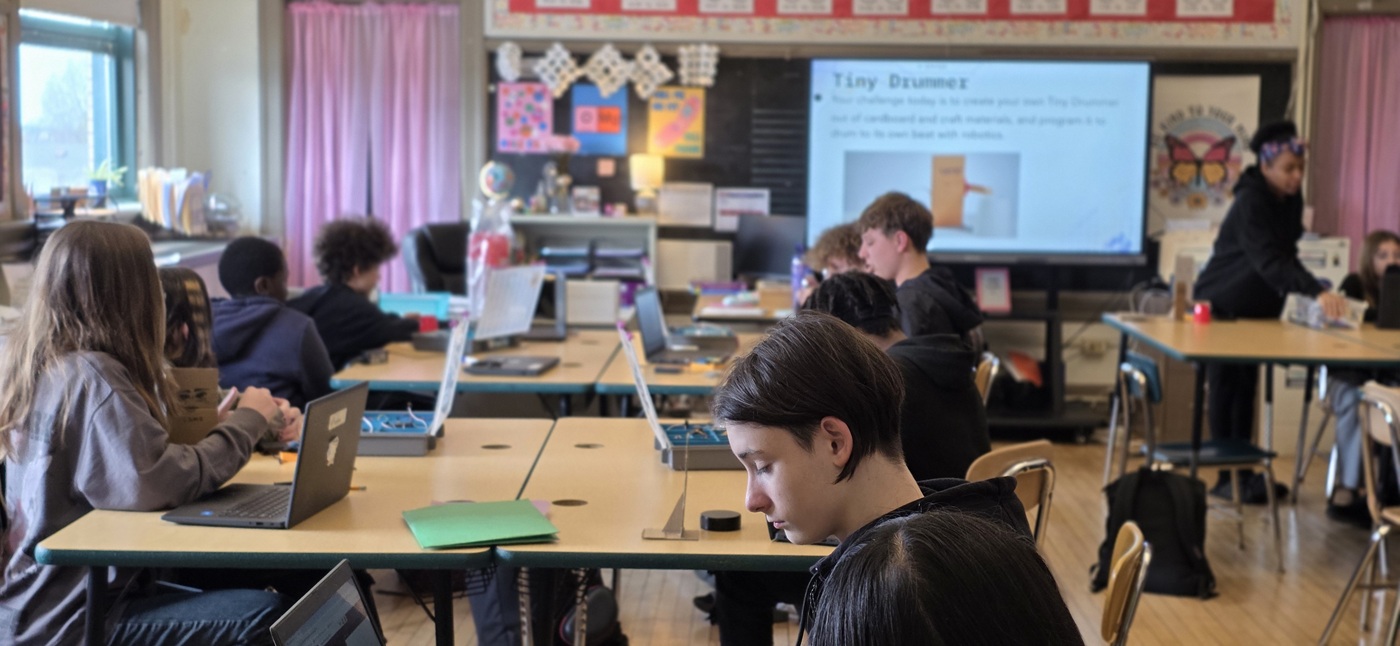
Melissa Fuller: Our in-class program operates as a seamless partnership, designed to enrich the existing curriculum without disrupting the classroom’s natural flow. We employ a team of full-time, specialized CS instructors who travel to our partner schools to lead instruction. This removes the burden from general classroom teachers who may not have a computer science background. Our co-teaching models ensure that we not only instruct students in CS education, but also model for teachers how to facilitate CS education for youth. Typically, our instructors deliver one 45–60-minute lesson per week to each class. This consistent, weekly exposure ensures that computer science becomes a fundamental part of their education, rather than a one-off workshop.
K4K: In addition to your in-school work, you also run afterschool programs. Where are these offered, and what does a typical afternoon look like?
Melissa Fuller: Our afterschool programs are strategically located within 30+ community sites throughout high-need corridors of Allegheny County, including locations like the Boys & Girls Clubs and the Best of the Batch Foundation. These programs operate in neighborhoods such as the Hill District, Homewood, McKees Rocks, Duquesne, Clairton, East Liberty, and the North Side.
A typical afternoon focuses on deep-dive project-based learning that moves students from basic digital literacy to advanced concepts like Python, AI, and robotics. While our in-school work provides broad exposure, the afterschool setting offers an extracurricular environment for students to pursue additional skills and prepare for future competitions. These sessions are designed to be safe, productive, and joy-based anchors of engagement that foster academic momentum and build science identity through hands-on tech exploration.
K4K: Summer camps are another element of your programming. Can you describe a typical day? Presumably, it’s not “all work and no play.”
Melissa Fuller: Not at all! Our summer camps are designed to feel like a digital playground. A typical day balances intensive Deep Dive sessions—where kids might spend the morning hypothesizing and prototyping a design element, working in a team environment, strategizing processes, and thinking critically about next steps—with plenty of Brain Breaks and fun. We make sure kids see the connection between the physical world and the digital one; they might relate a common everyday situation to understand how if-then logic works in code. The goal is to keep them inspired and engaged without the summer slide, in a fun, in-person, experiential environment. At the end of the 10-day intensive, youth have a completed project that is thought through in a team environment, with input, creativity, functionality, and purpose.
K4K: Can you share some examples of experiential learning in your programs—how students engage with hands-on, real-world tech or problem-solving?
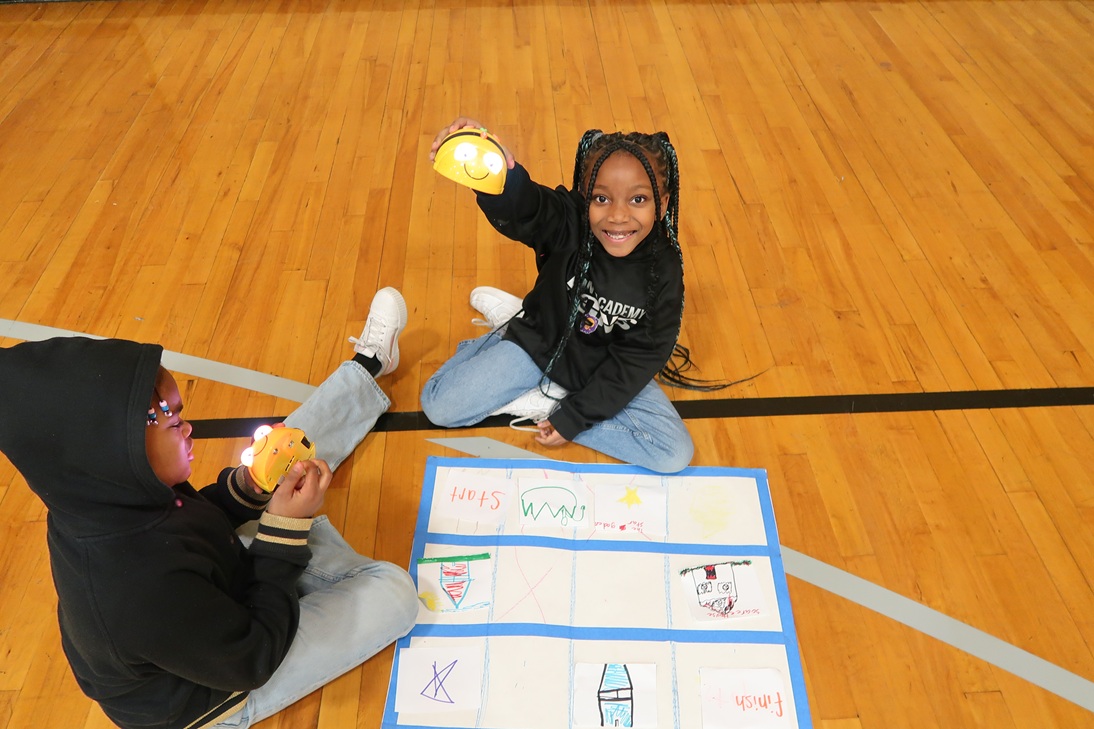
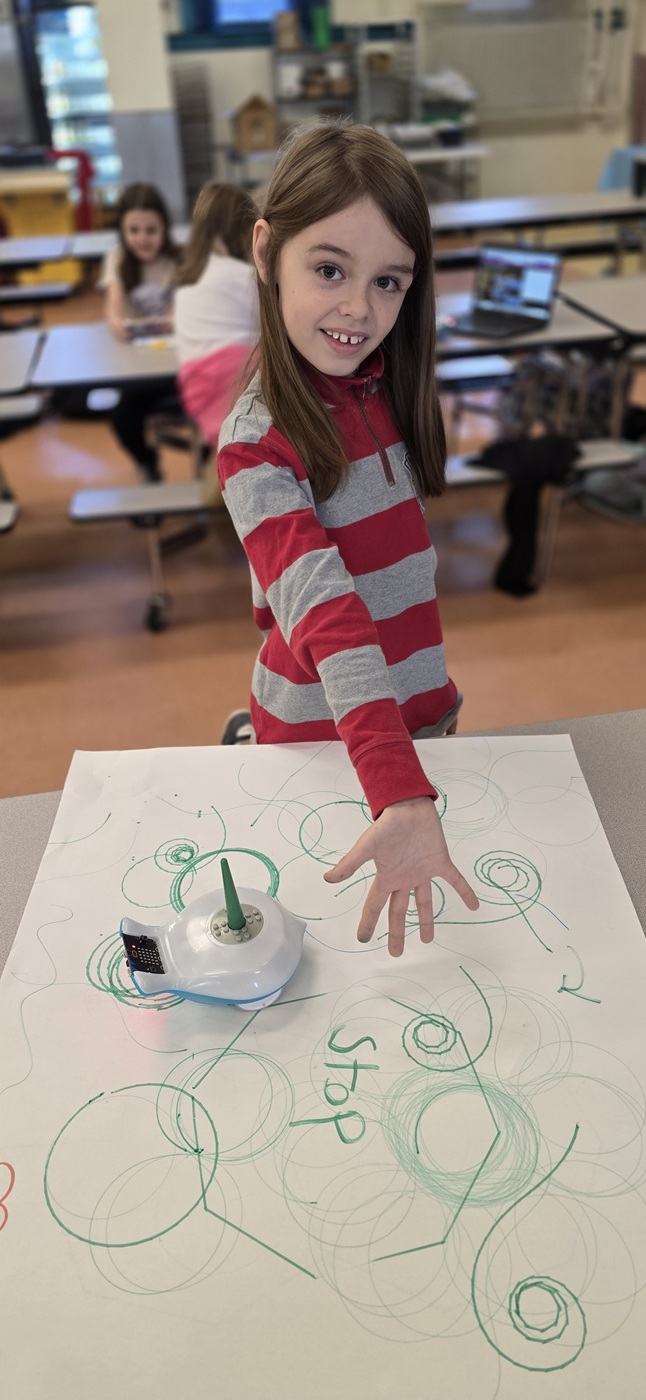
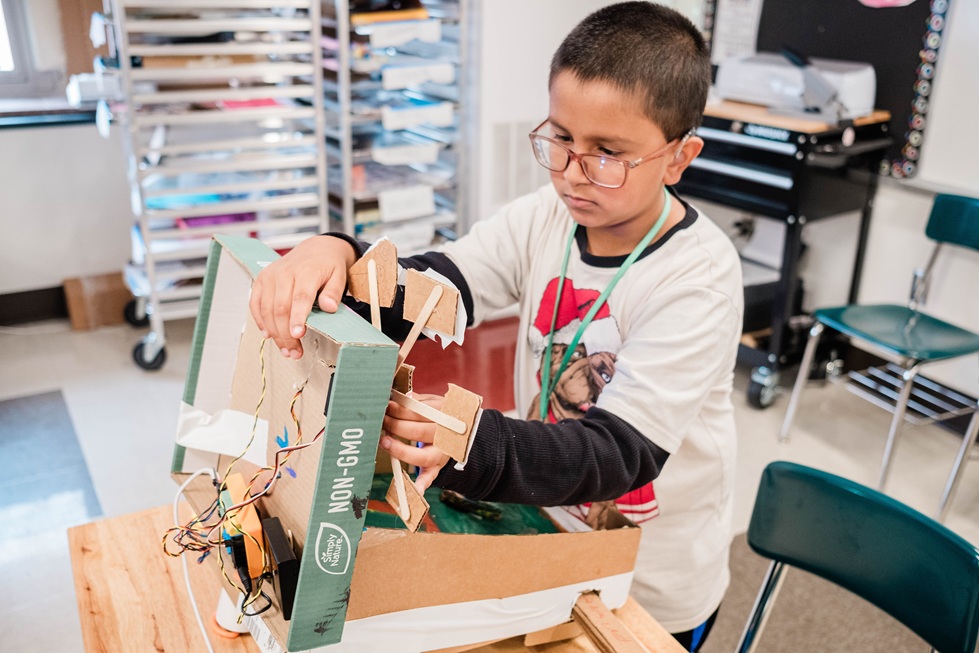
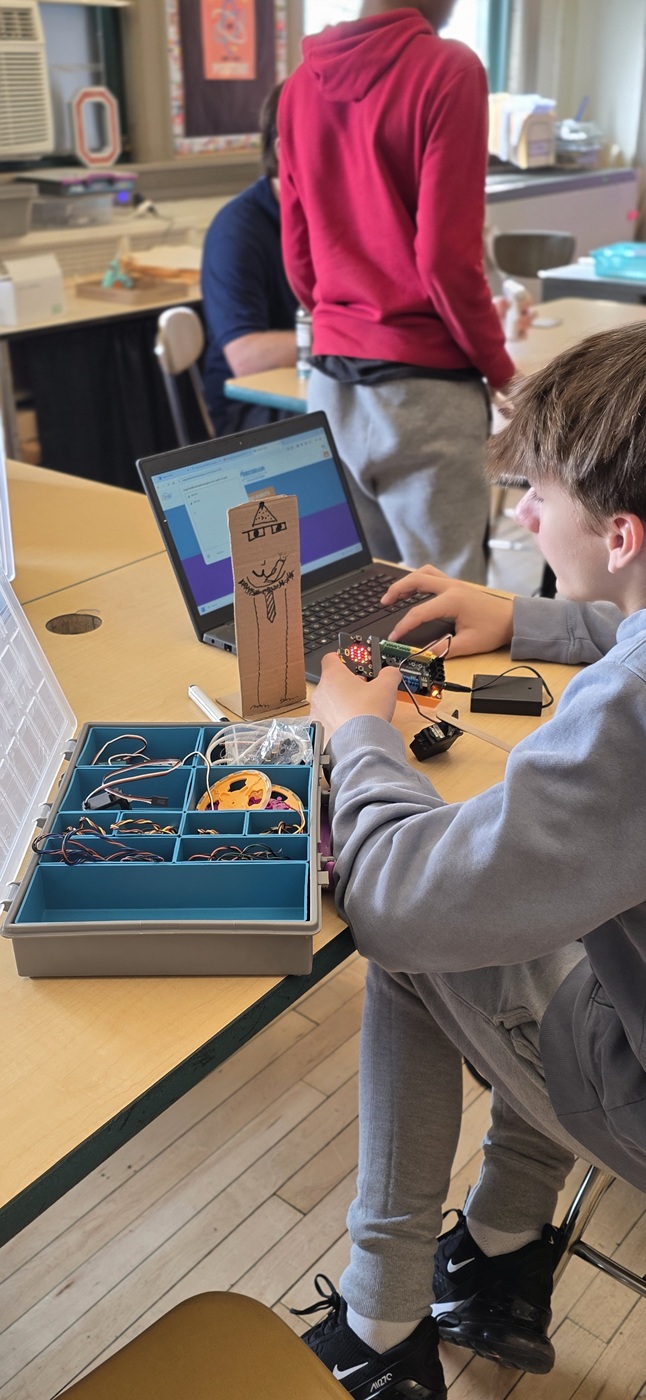
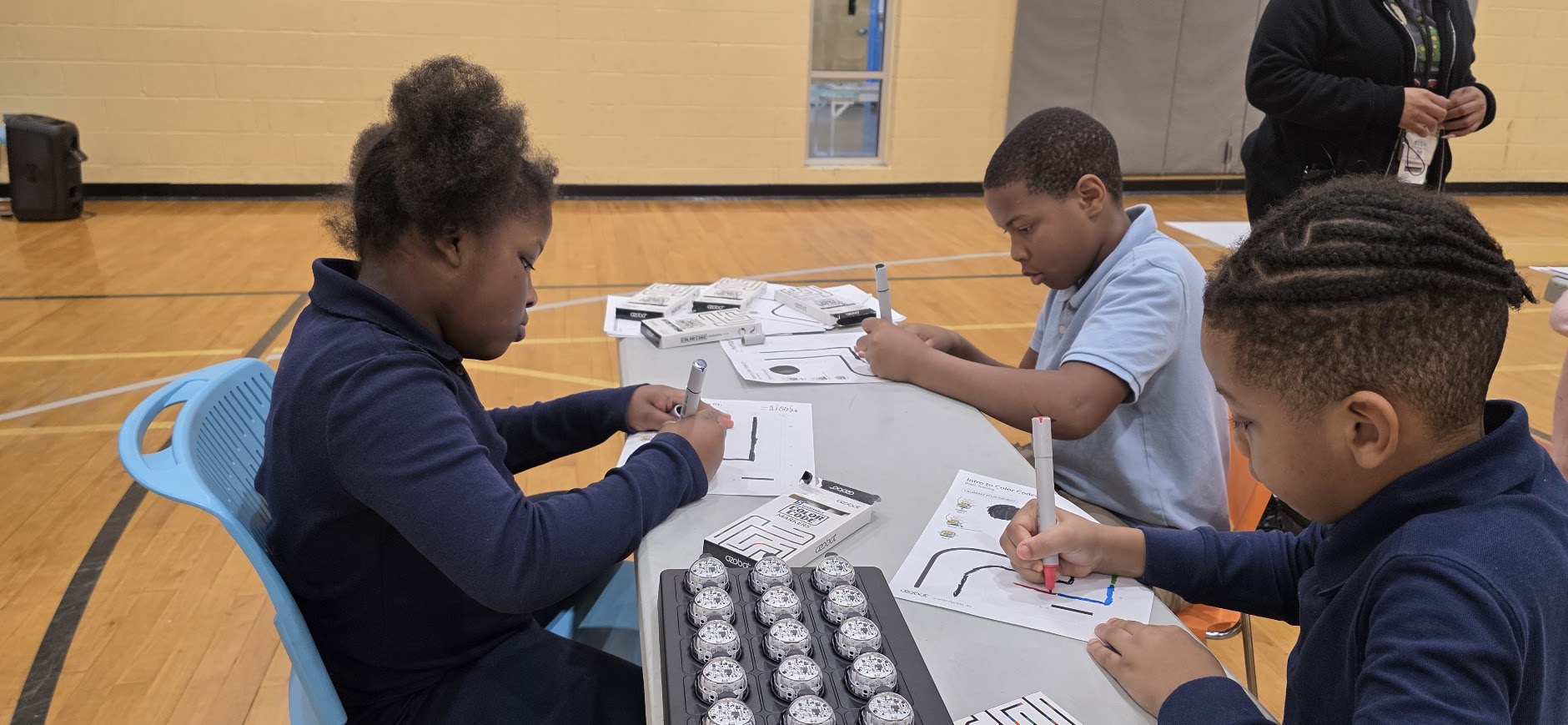
Melissa Fuller: Experiential learning is at the heart of the STEM Coding Lab curriculum, as we believe children learn best when they can touch, do, and experience. Our programs utilize hands-on, project-based activities to teach computer science and problem-solving through robotics and physical computing, gaming and animation, real-world problem solving, and unplugged activities that build computational thinking without the use of a computer.
K4K: How does computer science education differ between affluent and under-resourced school districts, and what are the consequences of that disparity?
Melissa Fuller: The disparity is often called the Participation Gap. In affluent districts, students often have wraparound tech exposure—laptops provided by the school to use in school and at home, coding camps in the summer, and robust CS electives. In the under-resourced schools we serve, a student’s first time ever seeing a line of code is often when an SCL teacher walks into their classroom.
The consequences are economic. If we don’t bridge this gap in K–8, we are effectively telling these children that the highest-paying jobs of the future aren’t for them. By providing this education early, we ensure that a child’s zip code doesn’t determine their digital literacy.
K4K: Can you tell us about the impact STEM Coding Lab has had since its founding in 2017—both in terms of numbers served and student outcomes?
Melissa Fuller: Since 2017, we’ve scaled from serving 15 students to over 4,300 across 30 locations. But the true impact is best seen in the shift of our students’ confidence.
One of our favorite examples is a middle school student who initially entered our program very hesitant, believing that coding was not for them. Through our robotics curriculum, he realized that coding was just another way to solve problems. By the end of the semester, he wasn’t just building robots; he was mentoring younger students and had set his sights on electives in high school that align with STEM. We aren’t just teaching syntax; we are helping students see themselves as creators and future leaders in a space they previously felt excluded from.
K4K: What’s next for the STEM Coding Lab?
Melissa Fuller: Our Vision 2028 is ambitious: we plan to expand our services to new cities and reach 10,000 students annually. We are particularly excited about our evolving AI curriculum. As one of the first organizations to bring AI education to the K–8 space through our partnership with Carnegie Mellon University, we are moving beyond basic coding to show students how to ethically and creatively use Artificial Intelligence. We want our students to be the ones building the next generation of AI, not just using it.